
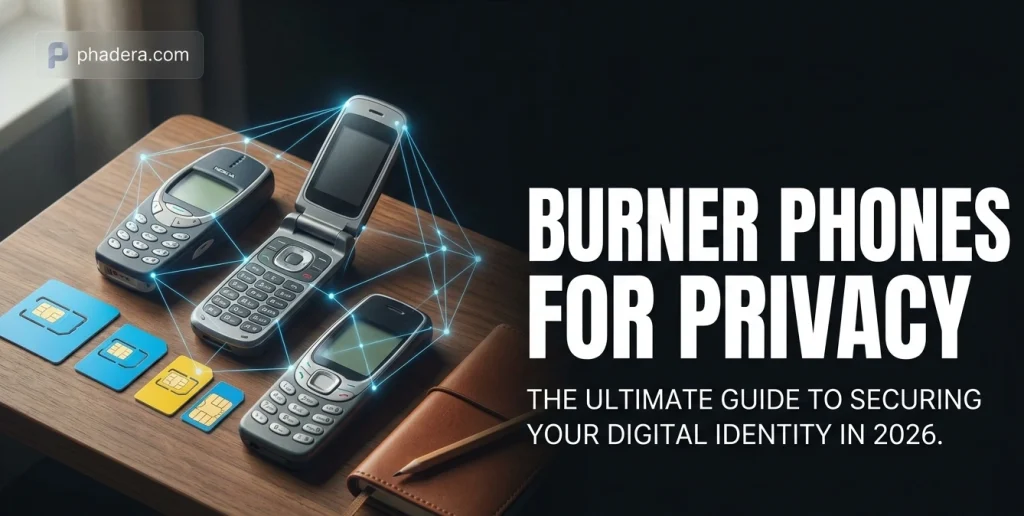
We live in an era where your smartphone knows more about you than your closest friends. From tracking your real-time location to logging your search habits and sharing data with third-party brokers, modern smartphones are tracking devices first and communication tools second.
If you are looking to reclaim your digital sovereignty, minimize your digital footprint, or simply take a break from the constant dopamine hits of social media, you might have considered a classic alternative: the burner phone.
But what exactly is a burner phone in 2026? Is it just for movie spies and cybercriminals, or does the average security-conscious person need one?
In this ultimate guide, we will break down everything you need to know about burner phones, how they boost your privacy, and how to set one up correctly.
What is a Burner Phone? (Moving Beyond the Hollywood Myth)
Traditionally, a burner phone is a cheap, prepaid mobile phone intended for temporary use, after which it can be literally or metaphorically “burned” (discarded) so the user cannot be tracked.
However, in 2026, the definition has evolved. Today, a burner phone generally refers to any phone used to isolate specific parts of your digital life from your main identity. This includes:
- Physical Feature Phones (“Dumbphones”): Basic devices (like a Nokia 105 or 110) that only handle calls and SMS, lacking modern operating systems, trackers, and apps.
- Privacy-Hardened Smartphones: Secondary smartphones running open-source, tracker-free operating systems (like GrapheneOS or LineageOS).
- Virtual Burners: Using software apps on your existing phone to create temporary, disposable phone numbers.
Pro Tip for Smartphone Users: If you love premium flagship smartphones but hate the privacy risks that come with massive data collection, you don’t necessarily have to jump straight to a basic dumbphone. Tech giants are constantly shaking up the market with new designs and security ecosystems. For instance, if you want to see how upcoming flagship devices are balancing innovation and hardware changes, check out our deep dive into the Google Pixel 11 and its Revolutionary ‘Pixel Glow’ Design.
Why You Need a Burner Phone: Real-World Use Cases
You don’t have to be hiding from the government to use a burner phone. Here are highly practical, everyday scenarios where a secondary, private number or phone is essential:
1. Online Marketplaces & Classifieds
When selling items on platforms like Facebook Marketplace, Craigslist, or local classifieds (like Hamrobazar), giving out your primary phone number is a massive security risk. A burner number keeps scammers, lowballers, and creeps away from your personal life.
2. Preventing Corporate Data Harvesting
Every time you sign up for a gym membership, a supermarket loyalty card, or a random website, they ask for your phone number. These numbers are often leaked in data breaches or sold to advertisers. A burner number acts as a shield against spam.
3. Digital Detox & Mental Well-being
Modern smartphones are engineered for addiction. Switching to a basic “dumbphone” burner over the weekend allows you to stay reachable for emergencies while completely disconnecting from email, Slack, and endless algorithmic scrolling.
4. Traveling to High-Risk Zones
When traveling internationally, passing through custom checkpoints can sometimes mean risking device searches. Bringing a clean, secondary phone ensures your primary data, banking apps, and private photos stay safe at home.
Physical Burner Phones vs. Virtual Burner Apps
Depending on your privacy threat model, you can choose between a physical secondary device or a software-based solution.
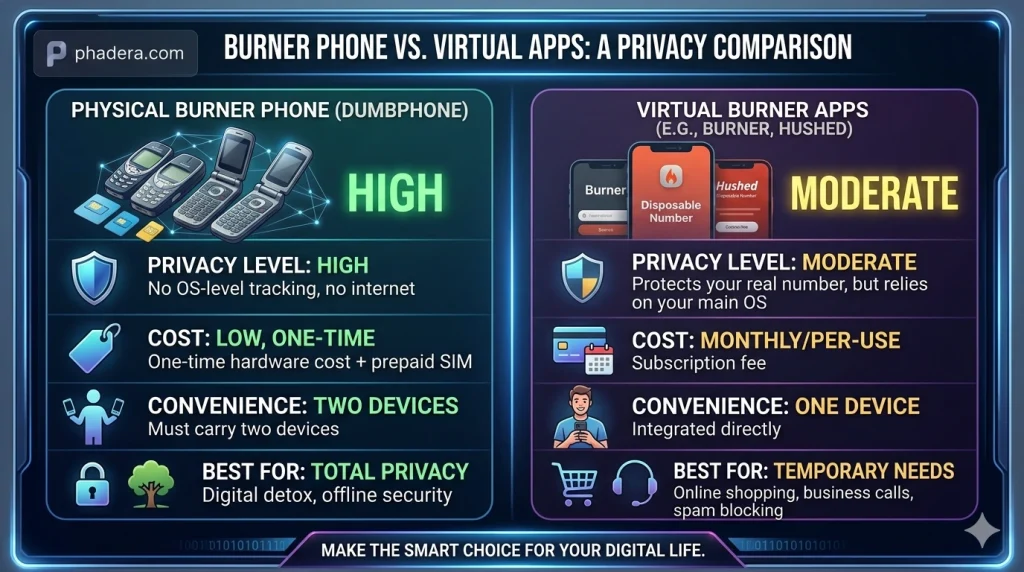
Burner Phone vs. Virtual Apps: A Privacy Comparison
Physical Burner Phone (Dumbphone)
High PrivacyHigh (No OS-level tracking, no internet)
Low, One-Time (Hardware cost + prepaid SIM)
Two Devices (Must carry an extra phone)
Total privacy, digital detox, and offline security.
Virtual Burner Apps (Burner, Hushed)
Moderate PrivacyModerate (Protects real number, but runs on main OS)
Monthly / Per-Use (Subscription fee model)
One Device (Integrated directly into your current phone)
Online shopping, short-term classifieds, and blocking spam.
The Reality of Anonymity: Can a Burner Phone Be Fully Untracked?
It is vital to clear up a common misconception: In most parts of the world, a completely anonymous burner phone no longer exists.
In many countries, including India, Nepal, and much of Europe, telecommunication laws require strict KYC (Know Your Customer) verification. You must provide a government-issued ID, a fingerprint, or a photograph just to purchase a SIM card.
How you are still tracked even with a basic phone:
- Cell Tower Triangulation: The moment your phone connects to a cellular network, the telecom provider logs which towers you are pinging, giving a rough estimate of your location.
- IMEI Tracking: Every phone has a unique International Mobile Equipment Identity (IMEI) number. If you insert your personal SIM into a “burner” phone, the network immediately links your identity to that new hardware.
The Privacy Takeaway: While a burner phone might not give you total government-level anonymity due to SIM registration laws, it provides exceptional security against corporate tracking, hacker correlation, phishing, and physical stalkers.
How to Properly Set Up a Burner Phone for Maximum Privacy
If you want to use a burner phone effectively, you must follow strict operational security (OpSec). Mixing your personal data with your burner phone completely defeats its purpose.
- Never Log into Personal Accounts: Do not log into your personal Google, Apple, iCloud, or social media accounts on your burner device.
- Pay with Cash: When purchasing a cheap feature phone or a prepaid SIM card (where identification laws allow), use cash instead of a credit card to avoid a digital financial paper trail.
- Keep Locations Separate: If you want absolute privacy for a specific task, turn the burner phone off before going home, and only turn it on when you are away from your residential area.
- Don’t Call Your Inner Circle: If you use your burner phone to call your spouse, parents, or best friends, data algorithms can easily map your social graph and deduce exactly who owns the “anonymous” phone.
Top “Dumbphones” Perfect for a Burner Setup
If you are looking for a reliable, cheap physical device to act as your digital shield or detox companion, look for these brands:
- Nokia (Classic Series): Devices like the Nokia 105, 110, or the iconic Nokia 3310 (Reborn) are cheap, have battery lives that last for weeks, and feature zero tracking software.
- Cat S22 Flip: A rugged flip phone that runs a stripped-down version of Android Go. It offers basic functionality but its small screen prevents mindless scrolling.
- The Light Phone II / Punkt MP02: Premium minimalist phones designed explicitly for digital detoxes. They offer beautiful hardware, high-end call quality, and zero distraction.
Final Thoughts: Should You Get One?
A burner phone is no longer just a prop from a crime drama—it is a practical tool for data minimization in a hyper-connected world. Whether you use a virtual number app to keep junk callers away from your personal phone, or carry a cheap Nokia to disconnect on weekends, taking control of your communication channels is the first step toward true digital privacy.
Protect your data, protect your time, and remember: if you don’t actively manage your digital footprint, big tech companies will do it for you.
Frequently Asked Questions (FAQs)
Are burner phones illegal?
Absolutely not. It is entirely legal to buy, own, and use secondary mobile devices and prepaid SIM cards for personal privacy or business purposes.
Can a burner phone be tapped?
Yes. Traditional cellular networks (GSM) use old encryption standards. Law enforcement can intercept calls and SMS via warrants, and malicious actors can use IMSI-catchers (Stingrays) to intercept traffic nearby. For encrypted communication, signal apps on data-only privacy smartphones are required.
Can I use WhatsApp on a burner phone?
Yes, you can register WhatsApp or Signal using a burner number. However, keep in mind that smartphones running standard Android or iOS will still collect telemetry data in the background unless properly configured.

Dal Bahadur is a passionate tech enthusiast, hardware reviewer, and the founder of Phadera Tech. With years of experience in mobile technology and digital troubleshooting, he specializes in deep-dive smartphone reviews, gadget guides, and practical tech tips. His goal is to help readers make informed decisions before buying their next gadget.