
Table of Contents
- Introduction
- What Is a Physical SIM?
- What Is an eSIM?
- eSIM vs Physical SIM: Key Differences
- Advantages of eSIM
- Advantages of Physical SIM
- eSIM vs Physical SIM: Which One Should You Choose?
- Future of SIM Technology
- FAQs
- Conclusion
Introduction
Smartphones are evolving faster than ever, and so is the way we stay connected. With eSIM rapidly replacing the traditional SIM card, many users are confused about which option is truly better. eSIM vs Physical SIM isn’t just a technical debate—it affects your travel experience, phone security, carrier flexibility, and even battery life. In this detailed comparison, we break down the benefits, pros, and cons of both eSIM and Physical SIM to help you choose the right option for your smartphone in 2025.
eSIM vsPhysical SIM is one of the most commonly discussed topics among smartphone users in 2025. As mobile technology evolves, the shift from traditional removable SIM cards to embedded digital SIMs continues to accelerate. Many new smartphones—even mid-range models—offer eSIM support as a standard feature, and some flagship devices have already removed the SIM tray entirely.
But what exactly makes eSIM different from a physical SIM? Which one is better? And how do these two technologies impact your daily smartphone experience?
In this guide, we break down everything you need to know—clearly, simply, and in depth—so you can easily decide which option suits your lifestyle and device.
What Is a Physical SIM?
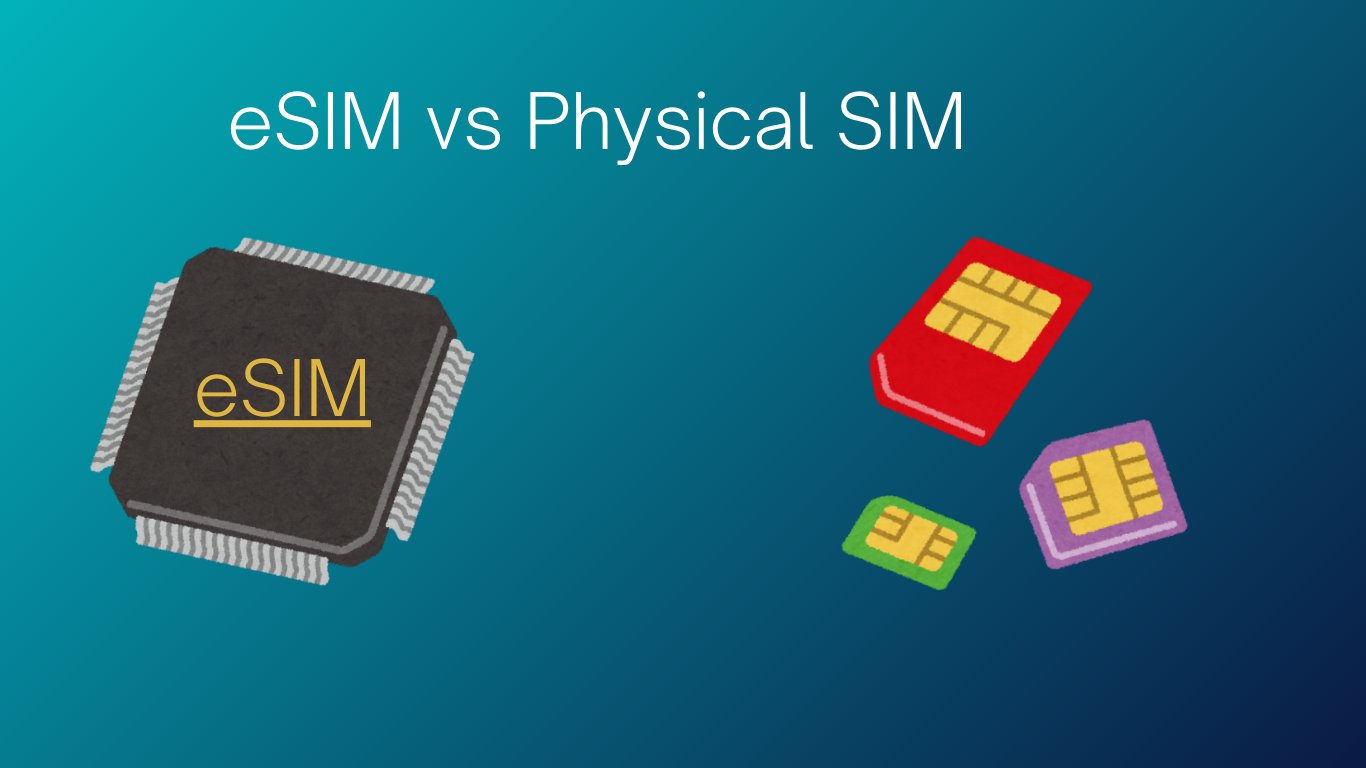
A Physical SIM (Subscriber Identity Module) is a small, removable card inserted into your smartphone. It holds your mobile number, authentication data, carrier information, and network settings. Because it’s removable, transferring your number from one device to another is quick and easy: just pop the SIM out and place it in another phone.
Key Features of Physical SIM
- Removable: Can be inserted and removed from any compatible device
- Universal Compatibility: Works on almost all phones, from budget models to premium devices
- Offline Activation: Does not require internet or apps for setup
- Dual SIM Support: Many phones allow two physical SIMs or one physical + one eSIM
Physical SIM cards have been the global standard for nearly three decades and remain widely used.
Best Smartphones Under $300 in 2025
What Is an eSIM?
An eSIM (Embedded SIM) is a digital version of the traditional SIM card. Instead of inserting a physical chip, the SIM functionality is embedded directly into your device’s motherboard. You activate it by scanning a QR code or using your carrier’s app.
This eliminates the need for physical cards, SIM trays, or manual installation.
Key Features of eSIM
- Not removable: Built directly into the device
- More secure: Cannot be physically taken out if a phone is lost or stolen
- Multiple profiles: Store several numbers and carrier plans
- Improved durability: No SIM tray means better water and dust resistance
eSIM technology is now supported by major manufacturers like Apple, Samsung, Google, Motorola, and more.
eSIM vs Physical SIM: Key Differences
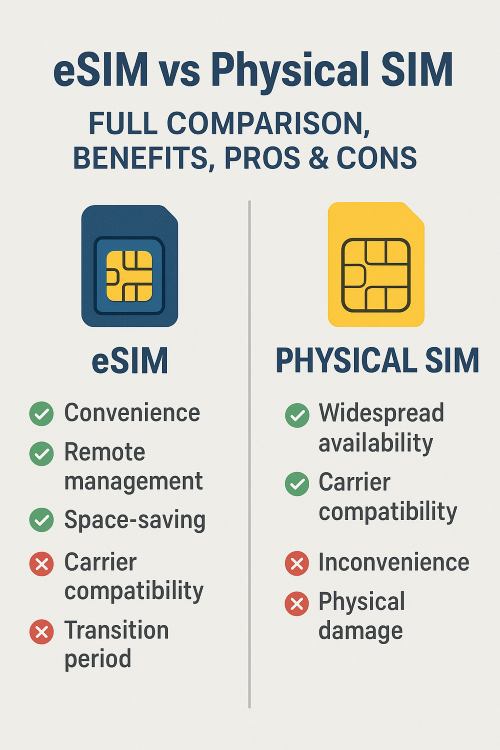
Below is a detailed comparison between a traditional SIM card and an eSIM.
| Feature | Physical SIM | eSIM |
|---|---|---|
| Form | Removable plastic card | Embedded digital chip |
| Setup | Insert manually | Scan a QR code or use an app |
| Switching Carriers | Swap SIM cards manually | Switch instantly via software |
| Travel Convenience | Buy a new SIM in every country | Download local eSIM plans instantly |
| Security | Easy to remove | Cannot be removed—more secure |
| Device Support | Works on all phones | Only modern smartphones support it |
| Durability | Requires SIM tray | Helps improve waterproofing |
| Environmental Impact | Plastic waste | Eco-friendly—no plastic used |
The shift toward eSIM is largely driven by convenience, security, and modern smartphone design trends.
Advantages of eSIM
1. Multiple Profiles & Instant Switching
One of the biggest advantages of eSIM technology is its ability to store multiple mobile profiles. For example, you can keep your primary number, a travel eSIM plan, and a work number all inside the same device.
Switching between these profiles takes only a few seconds—no need to handle physical cards or carry extra SIMs.
2. Higher Security
Since an eSIM cannot be physically removed, it provides a significant security advantage.
If your phone is lost or stolen:
- The thief cannot remove the SIM to disconnect traceability
- Your device remains linked to the network
- You can still track or lock your device remotely
This makes eSIM especially useful for users concerned about data privacy and device safety.
3. Ideal for International Travelers
Travelers benefit tremendously from eSIM technology. Instead of buying physical SIM cards in each country or dealing with tourist plans, you can:
- Purchase a travel eSIM online
- Activate it before the flight
- Switch to it instantly upon arrival
This eliminates roaming costs and long queues at airport SIM counters.
4. Better for Waterproof and Slimmer Phones
Removing the SIM tray allows manufacturers to seal the device better.
This results in:
- Improved water resistance
- Fewer physical entry points
- Potentially slimmer and more compact designs
For companies pushing for minimalist, portless designs, eSIM is essential.
Advantages of Physical SIM
1. Works on All Phones
A traditional SIM card works on all types of phones—smartphones, feature phones, old models, and even routers. This universal compatibility makes it ideal for users who frequently change devices or use basic phones.
2. No Internet Required for Activation
While an eSIM requires an internet connection or app to activate, a physical SIM works instantly.
Just insert the card, restart the phone, and the network becomes active.
3. Easy to Swap Between Devices
For people who use multiple phones or test devices often, physical SIMs provide unmatched convenience.
You can move your number simply by inserting your SIM into another device—no setup process required.
4. Useful for Repairs or Emergencies
If your phone suddenly stops working, you can quickly remove your SIM and use another device. With eSIM, you would need to activate a new device through carrier support or an app.
eSIM vs Physical SIM: Which One Should You Choose?
Choosing between an eSIM and a physical SIM depends entirely on your lifestyle, device capabilities, and personal preference.
Here’s a quick guide to help you decide.
Choose eSIM if:
- You travel frequently
- Security is a top priority
- You use newer smartphones (2023–2025 models)
- You want instant carrier switching
- You prefer a minimalist device with no SIM tray
- You like managing numbers digitally
eSIM is designed for people who want a hassle-free, modern mobile experience.
Choose Physical SIM if:
- You use older or budget phones
- You often swap SIMs between multiple phones
- You want offline activation
- You prefer tangible control over your SIM
- You need compatibility with all types of devices
Physical SIMs still provide flexibility and are ideal for users who rely on traditional processes.
Future of SIM Technology
The future of SIM technology is rapidly evolving. Almost every major smartphone manufacturer is shifting toward eSIM-focused designs.
Key Trends
- Apple has already launched eSIM-only iPhones in the U.S.
- Samsung and Google now offer dual eSIM and eSIM-only options in select regions
- Wearables like smartwatches rely primarily on eSIM
- IoT devices (smart home gadgets, trackers, vehicles) exclusively use eSIM
As carriers worldwide expand eSIM support, physical SIM slots may eventually disappear from high-end devices.
👉 GSMA eSIM Technology Overview:
https://www.gsma.com/esim/
FAQs
1. Is eSIM better than Physical SIM?
Yes, in most cases.
eSIM offers better security, convenience, and flexibility.
2. Can I use both eSIM and Physical SIM together?
Yes.
Most modern phones support Dual SIM: one eSIM + one physical SIM.
3. Is eSIM safe to use?
Absolutely.
eSIM cannot be physically removed, making it more secure than traditional SIM cards.
4. What if I want to switch phones?
You can transfer your eSIM digitally, though the process varies by carrier.
Physical SIMs are easier to move instantly.
5. Does eSIM work on all phones?
No.
Only modern smartphones support eSIM. Older or basic models rely on physical SIMs.
6. Can I convert my Physical SIM to eSIM?
Yes.
Most carriers allow SIM-to-eSIM conversion through QR codes or mobile apps.
Conclusion
The debate between eSIM vs Physical SIM reflects the changing landscape of mobile technology. eSIM offers futuristic advantages—security, convenience, multiple profiles, and better device design. For most modern users, eSIM is clearly the more advanced and efficient option.
However, physical SIM cards still remain relevant. Their universal compatibility, offline activation, and ease of swapping make them practical for many users, especially those with older devices or multi-phone setups.
In the end, both technologies have their strengths, and the best choice depends on your lifestyle, device, and preferences.
But one thing is certain—the future is leaning heavily toward eSIM, and its adoption will only continue to grow.