
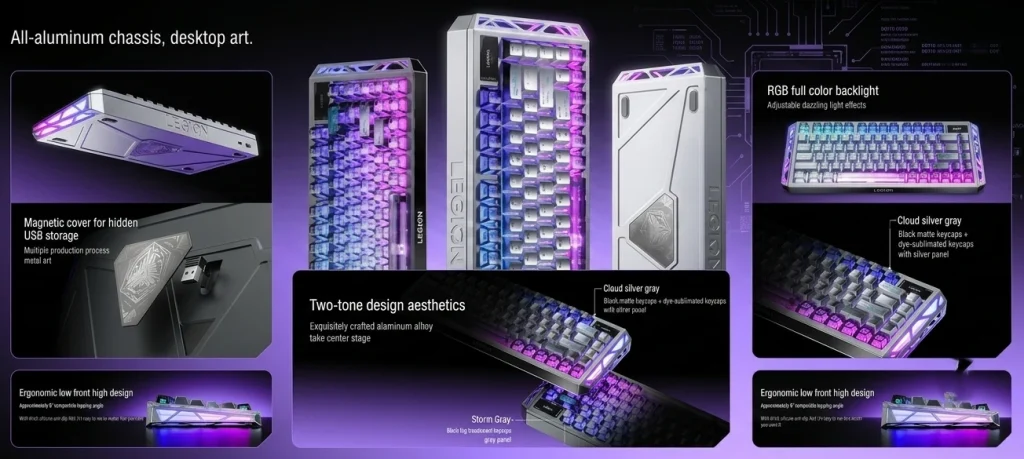
The mechanical keyboard market is undergoing a seismic shift. While mechanical switches dominated the last decade, Hall Effect magnetic switches are taking over the competitive gaming scene. Entering the ring with a serious statement of intent is the Lenovo Legion R7 RT75—a feature-packed 75% wireless magnetic gaming keyboard.
Serious gaming requires optimized hardware across all your devices, whether you are dialing in ultra-low latency on your mechanical keyboard or looking for high-refresh-rate mobile performance. If you want to pair your desktop setup with top-tier mobile performance, explore our ultimate guide on which mobile company is best for gaming in 2026 to see which brands lead the market in cooling, chipsets, and display tech.
Here is a comprehensive breakdown of the specs, performance, build architecture, and real-world value of the Legion R7 RT75.
Technical Specifications Overview
Technical Specifications
Standout Features Deep Dive
1. Ultra-Low Latency: True 8,000 Hz Wireless Polling
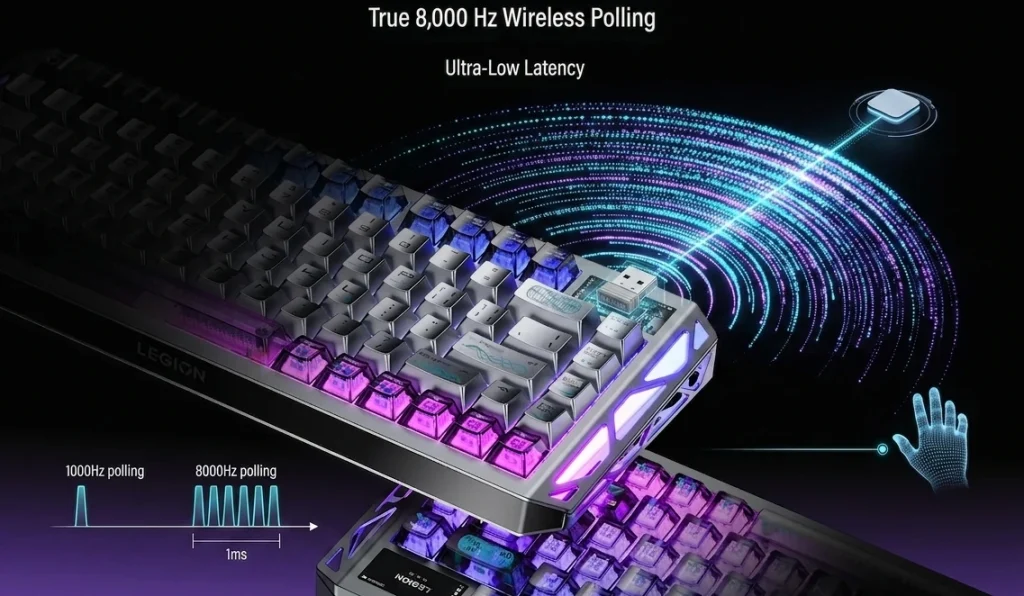
Standard gaming keyboards transmit keystrokes at a rate of 1,000 Hz (1ms delay). The Legion R7 RT75 scales this up to 8,000 Hz (0.125ms delay)—not just over USB-C, but over its 2.4GHz wireless dongle. Paired with Hall Effect magnetic sensors, keypress register instantly, eliminating physical bounce delay (debounce time) inherent to traditional mechanical contacts.
While standard mechanical boards cap out at a 1,000 Hz report rate, the R7 RT75 pushes input frequency up to 8,000 Hz. If you want to understand how millisecond delay measurements impact competitive play, RTINGS’ keyboard latency test methodology breaks down how polling rates reduce input delay during fast-paced movement.
2. Advanced Magnetic Switch Capabilities
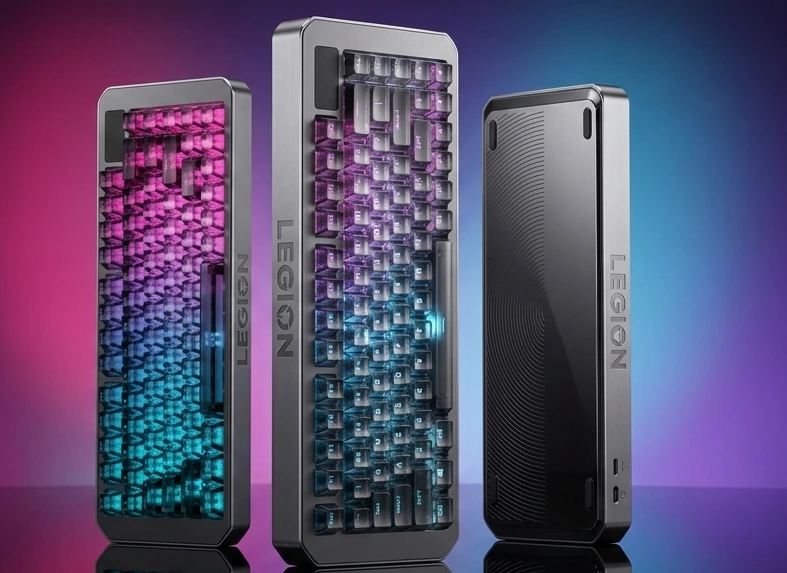
Unlike traditional physical contact points, Hall Effect sensors detect keypresses via magnetic field variations. If you are new to adjustable actuation points and dynamic resets, learning how Hall Effect magnetic switches work makes it clear why rapid trigger technology gives FPS players a distinct advantage.
Because magnetic switches use the Hall Effect to measure distance rather than a physical contact point, the R7 RT75 unlocks competitive features:
- Rapid Trigger (RT): Keys reset the moment they move upward, allowing instant rapid-tapping in games like Valorant or CS2.
- Dynamic Key Strokes (DKS): Program up to four actions on a single key based on press depth (e.g., light press to walk, deep press to sprint).
- SOCD (Simultaneous Opposite Cardinal Directions): Prioritizes the last input pressed without requiring you to release the previous key, enabling near-instant directional strafing.
3. Acoustic Design & Carbon Fiber Plate
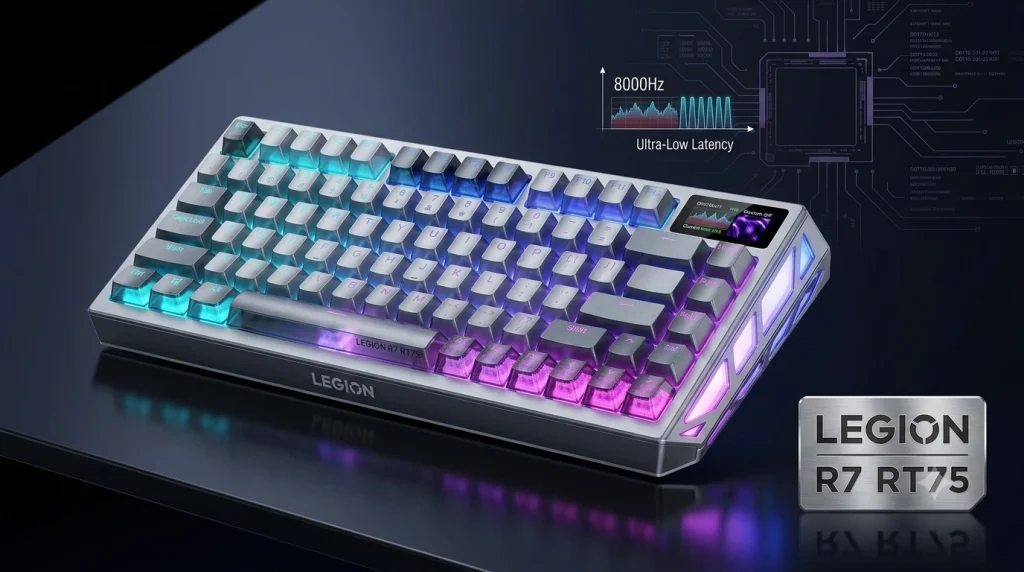
Unlike standard metallic custom boards that reverberate hollow clacks, Lenovo opted for a carbon fiber positioning plate paired with a gasket mount setup. Supported by a 5-layer acoustic dampening stack (including IXPE switch pads and high-density PORON bottom foam), the keyboard produces a deeper, marble-like “thocky” sound profile right out of the box.
4. Integrated 1.4-Inch TFT Display
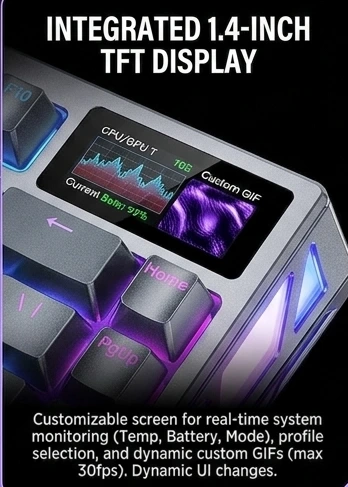
Situated at the top right, the built-in color display provides real-time system monitoring (CPU/GPU temperature, battery status, active connection mode) and supports custom GIF animations without needing secondary software open on your desktop.
How It Compares: Legion R7 RT75 vs. Competitors
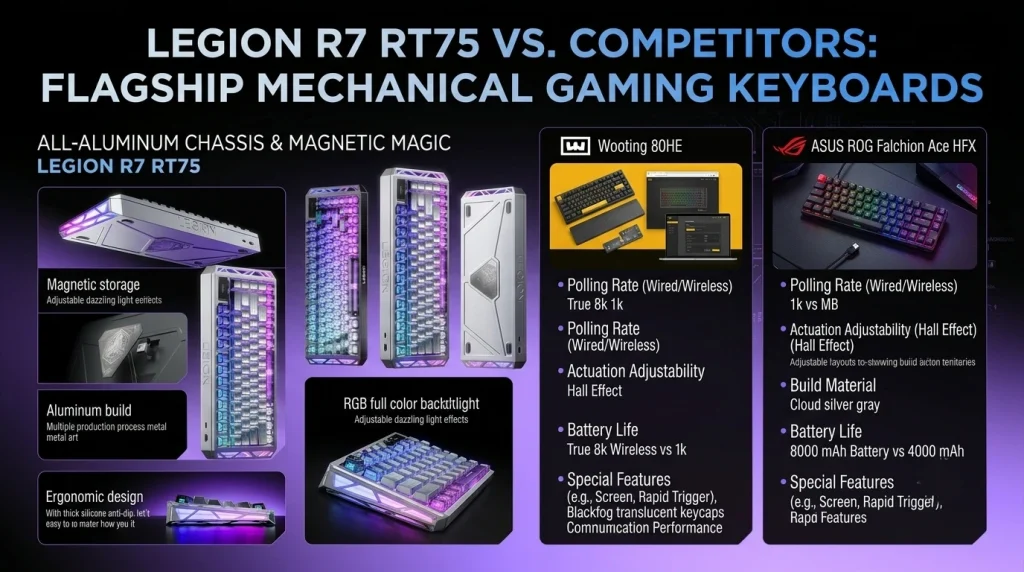
While the R7 RT75 holds its ground with an integrated TFT screen and an 8,000 mAh battery, key rivals like the ASUS ROG Falchion Ace HFX and Wooting 80HE offer their own unique takes on web-based software and compact layouts.
To see where the Lenovo Legion R7 RT75 stands in the current market, here is a direct comparison against two popular Hall Effect flagships: the Wooting 80HE and the ROG Falchion Ace HFX.
While desktop-grade peripherals like the Legion R7 RT75 cater to ultra-low latency PC setups, portable gaming hardware is seeing a massive shift toward high-performance specs as well. If you are tracking the latest hardware releases alongside your keyboard setup, check out our in-depth look at the ASUS ROG Xbox Ally X to see how mobile power and custom ergonomics are evolving across the handheld market.
Flagship Magnetic Keyboard Comparison
Final Summary
The Lenovo Legion R7 RT75 sets a new benchmark for what modern wireless gaming keyboards can deliver. By combining an ultra-precise magnetic switch system, low-latency 8K wireless capabilities, and custom-keyboard acoustics, Lenovo has successfully bridged the gap between enthusiast custom feel and competitive esport performance.
If you are looking for an all-in-one flagship setup with a full CNC body, dynamic display, and top-tier rapid-trigger responsiveness, the Legion R7 RT75 is easily one of the most compelling options available today.
Frequently Asked Questions
What is the polling rate of the Lenovo Legion R7 RT75?

The Lenovo Legion R7 RT75 features a true 8,000 Hz (8K) wireless polling rate over both 2.4 GHz wireless and wired USB-C connections, delivering an ultra-low latency response time of 0.125ms. Over Bluetooth, it operates at a standard 125 Hz.
What switches does the Legion R7 RT75 use?
It uses Magnetic Aurora Hall Effect switches. These offer magnetic actuation, allowing you to customize keypress depths from 0.1mm to 3.4mm, alongside support for Rapid Trigger technology (up to 0.01mm sensitivity), SOCD, and Dynamic Key Strokes (DKS).
How long does the battery last on the Lenovo Legion R7 RT75?
The keyboard is equipped with a massive 8,000 mAh battery. Battery life varies depending on RGB lighting and polling rate settings, but the capacity is designed to comfortably support power-heavy 8K Hz wireless transmission.
What can you display on the 1.4-inch TFT screen?

The integrated 1.4-inch screen provides real-time system monitoring (such as CPU/GPU temperatures, battery level, and active modes), profile selection settings, and support for dynamic custom GIFs (up to 30 fps).
What is the price of the Lenovo Legion R7 RT75?

The Legion R7 RT75 launched in China for 1,299 Yuan (approximately $180–$190 USD). Global pricing and regional availability details are expected to follow.

Dal Bahadur is a passionate tech enthusiast, hardware reviewer, and the founder of Phadera Tech. With years of experience in mobile technology and digital troubleshooting, he specializes in deep-dive smartphone reviews, gadget guides, and practical tech tips. His goal is to help readers make informed decisions before buying their next gadget.