
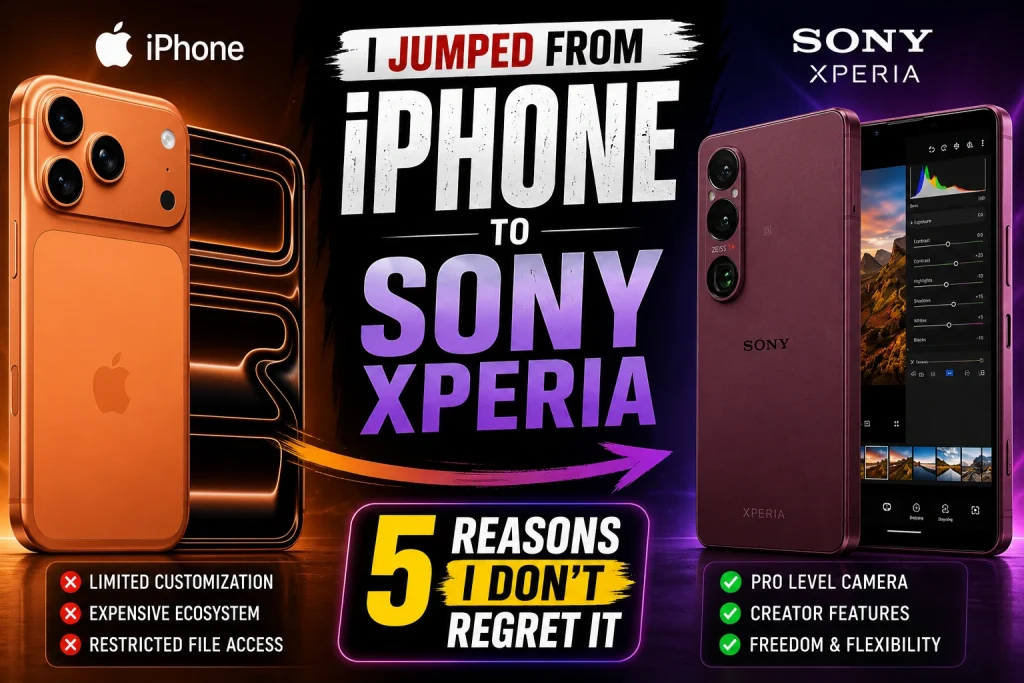
Making the decision to leave the Apple ecosystem is never easy. For years, iPhones have held an undisputed grip on the premium smartphone market. Like millions of tech enthusiasts, I was locked into the seamless flow of iOS. Most recently, I was using Apple’s flagship giant—the iPhone 17 Pro Max. It is, by all technical measures, a powerhouse of modern engineering.
Yet, over time, a subtle feeling of repetition started setting in. Every flagship update began feeling incremental, safe, and stripped of raw tactile utility. I found myself asking a simple question: Are we buying innovation, or are we just buying familiarity?
That thought eventually pushed me to do something most die-hard iOS users consider unthinkable. I put down my iPhone 17 Pro Max and made the official jump to the Sony Xperia 1 VIII.
It’s been weeks since I made the switch, and the reaction from friends and fellow tech readers has been identical: “Why would you leave the top-tier iPhone for a Sony?”
Here is my honest experience, broken down into the 5 core reasons why I made the leap—and why I haven’t looked back since.
1. Premium Industrial Design and Superior Build Quality
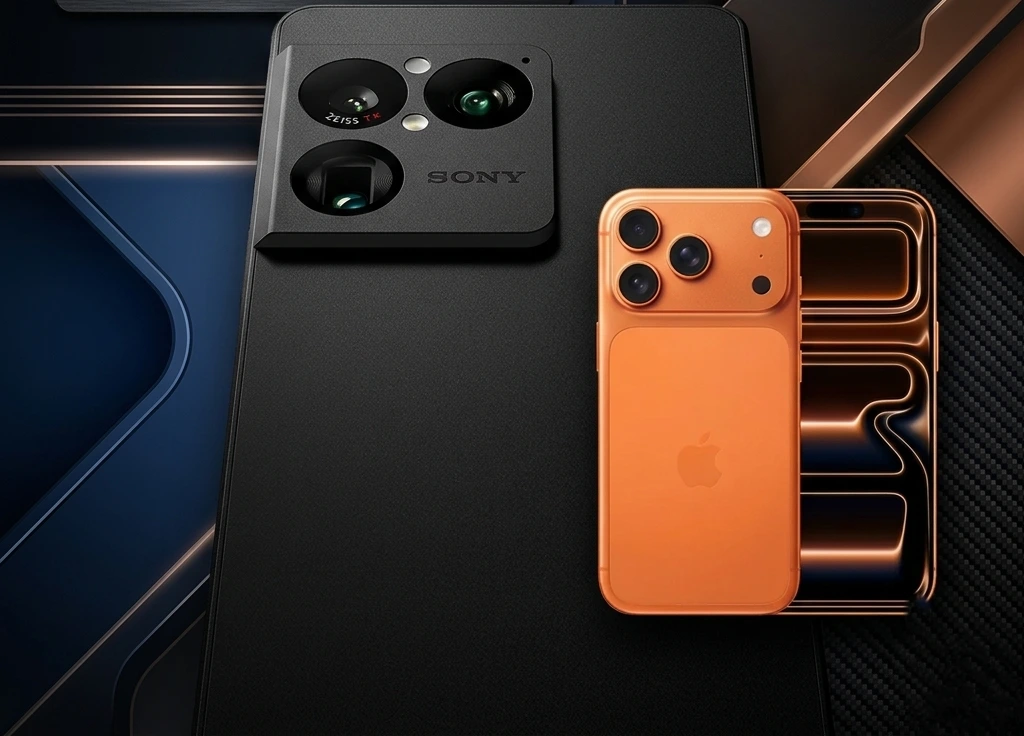
When you unbox the iPhone 17 Pro Max, you know exactly what to expect. It’s heavy, polished, and beautifully machined—but it also feels almost identical to every high-end iPhone that came before it. It has become the standard corporate template of what a smartphone looks like.
The moment I picked up the Sony Xperia 1 VIII, the difference in hand-feel was immediate.
Sony approaches industrial design from a completely different philosophy. Rather than following the trend of rounded, slippery slabs with massive camera bumps that throw off the balance, the Xperia 1 VIII feels like an instrument crafted specifically for creators.
Tactile Elegance Meets Functional Ergonomics
- The Frame and Grip: Sony utilizes a distinct micro-textured tactile finish along the aluminum side rails and back glass. It doesn’t just look sophisticated; it actively prevents accidental slips. You don’t feel forced to put a bulky case on it just to hold it securely.
- Proportional Balance: The elongated aspect ratio makes holding a large-screen phone effortless with one hand compared to the wide, bulky footprint of the iPhone 17 Pro Max.
- No Unnecessary Screen Notches: While Apple continues to occupy valuable screen real estate with hardware cutouts at the top of the display, Sony keeps the display completely clean and uninterrupted by placing the front camera into ultra-slim top bezels.
Holding the Xperia 1 VIII feels undeniably premium. It isn’t trying to look like every other glass rectangle on the market; it carries a distinct, understated luxury that stands out the moment you lay it on a table.
2. A Display Experience That Ruins Other Screens
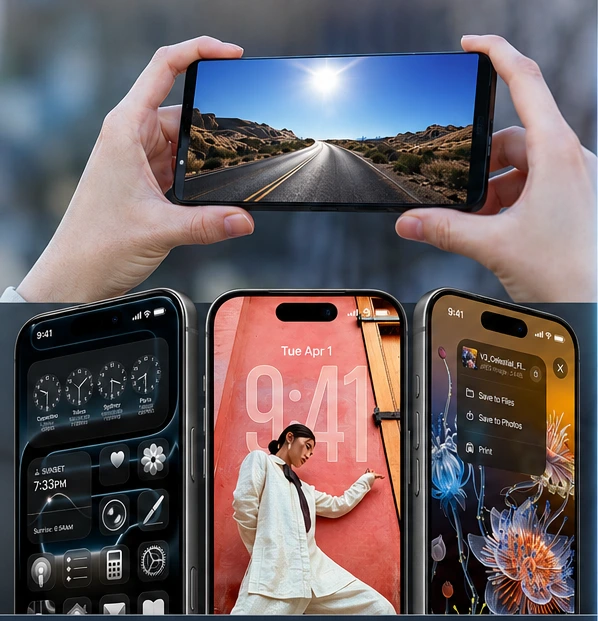
If you use your phone heavily for streaming high-bitrate movies, watching high-resolution content, or reviewing high-res photos, the display quality is paramount.
The iPhone 17 Pro Max undeniably features a bright, vibrant OLED panel. But the Sony Xperia 1 VIII screen quality is on an entirely different level.
Feature Comparison
Apple iPhone 17 Pro Max vs. Sony Xperia 1 VIII
Unmatched Visual Precision and 8K Content Support
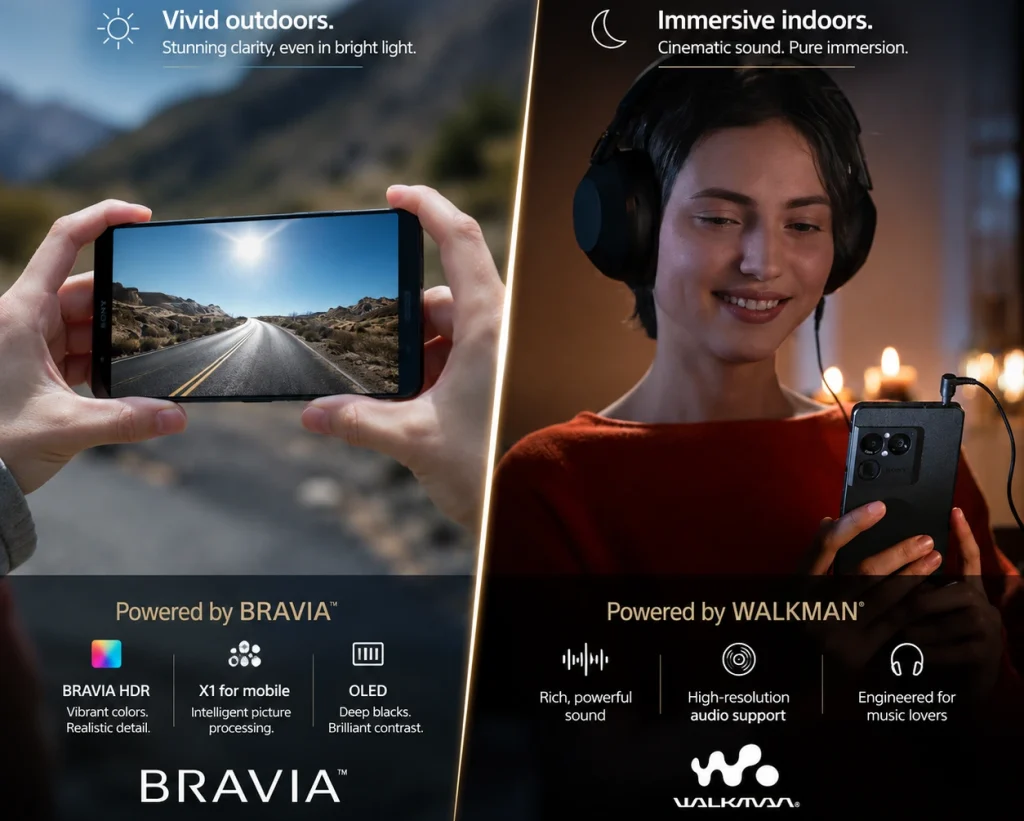
Sony imported the color processing algorithms and contrast engines directly from their line of world-class BRAVIA TVs and Master Series reference monitors. The result is a display that presents colors with unmatched accuracy, depth, and dynamic range.
While most flagship screens render content in standard HD or 2K resolutions and artificially boost color saturation to make panels look “pop-y,” the Xperia 1 VIII delivers raw, true-to-life visual fidelity. Supporting playback and recording capabilities for high-bitrate 8K content, watching cinematic trailers or viewing high-resolution media on this panel is a jaw-dropping experience.
When you watch native cinematic content on the Xperia 1 VIII back-to-back with the iPhone 17 Pro Max, the iPhone suddenly looks overly processed, whereas the Sony feels like a portable cinema monitor.
3. The Rebirth of Real Features: The 3.5mm Headphone Jack & MicroSD Expansion
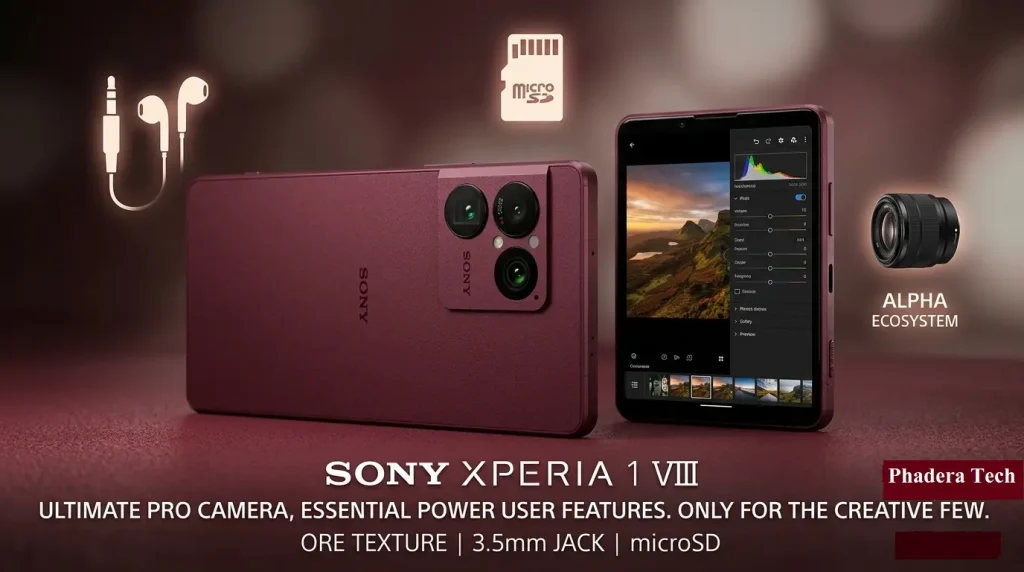
For years, smartphone manufacturers have been stripping away essential physical features under the guise of “courage” and thinness, pushing users toward expensive wireless accessories and cloud storage subscriptions.
Switching to the Xperia 1 VIII reminded me of what true user freedom feels like.
The Return of Studio Audio (3.5mm Jack)
As much as wireless earbuds have improved, Bluetooth audio still compresses music files. If you care about true, lossless hi-res audio, wireless simply cannot compete with a high-end wired connection.
The Sony Xperia 1 VIII includes a dedicated 3.5mm headphone jack powered by a high-grade internal DAC (Digital-to-Analog Converter).
- I can plug in my studio-grade wired headphones directly without carrying annoying dongles that break or get lost.
- There is zero latency when editing video or listening to high-fidelity audio tracks.
- You never have to worry about your headphones running out of battery during long work sessions.
Storage Freedom Without Monthly Subscriptions
When buying an iPhone 17 Pro Max, you are forced to pay exorbitant price jumps upfront if you want higher storage tiers, or pay endless monthly fees for cloud storage.
Sony remains one of the only premium manufacturers to keep a tool-less microSD card slot. I was able to pop in a 1TB card straight from my camera, giving me instant access to my media files without needing a Wi-Fi connection or paying a monthly fee.
4. The Camera Truth: The Master Behind the Lens
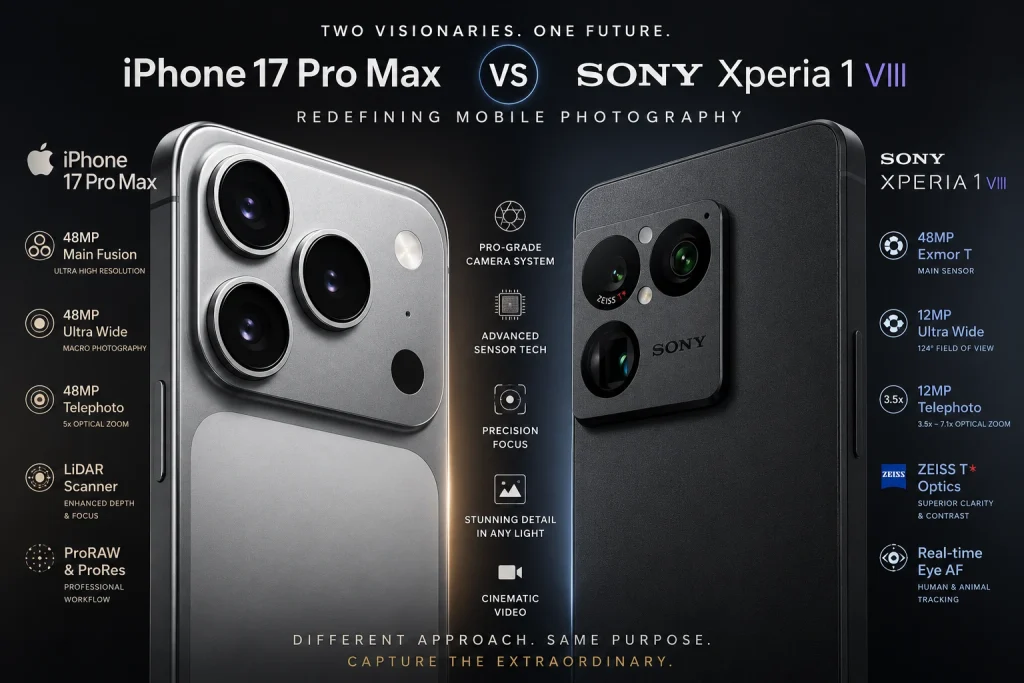
There is a dirty little secret in the smartphone industry that casual consumers often miss: Apple relies heavily on Sony hardware for their camera systems.
For years, iPhones have used custom image sensors manufactured by Sony. While Apple writes great software algorithms to process those images, buying a Sony flagship phone means you are going straight to the source—the company that builds the actual hardware powering the world’s best digital cameras.
- Uses Sony Hardware
- Heavy Software Filter
- Aggressive Processing
- Uses Native Sony Hardware + Alpha
- Pro Manual Controls
From Artificial Processing to Pure Photography
The iPhone 17 Pro Max takes good point-and-shoot photos, but it suffers from aggressive computational over-processing. Shadows are often artificially lifted, skin tones can look overly smoothed, and light sources can carry digital halos.
The Xperia 1 VIII treats photography like a real Sony Alpha camera:
- Natural Color Rendering: Instead of forcing bright, artificial colors onto your photo, the Xperia captures realistic tones, subtle shadows, and true color accuracy.
- True Optical Zoom: Sony’s continuous optical zoom mechanism allows you to zoom through focal lengths smoothly without relying on digital cropping that degrades image quality.
- Physical Two-Stage Shutter Button: The Xperia features a dedicated, textured physical shutter button on the side of the frame. You lightly press half-way to lock focus, then press down fully to snap the shot—just like a professional mirrorless camera.
Instead of fighting against an automated AI algorithm that decides how your picture should look, the Xperia 1 VIII gives you complete control over ISO, shutter speed, focus tracking, and RAW capture.
5. Butter-Smooth Performance Without Software Restrictions
One of the main reasons people hesitate to leave iPhones is performance stability. iOS has long been praised for its fluid animations and app optimization.
However, modern Android flagships running on top-tier silicon paired with clean software have completely closed that gap—and in many ways, surpassed it.
Raw Speed Meets Unrestricted Customization
Powered by the absolute latest flagship processor and running a pristine, lightweight version of Android, the Sony Xperia 1 VIII feels ridiculously smooth.
- Thermal Management: Sony redesigned the internal vapor chamber cooling system for the Xperia 1 VIII. Even during sustained heavy gaming, 8K video recording, or high-end multitasking, the phone maintains consistent frame rates without aggressively throttling performance or getting uncomfortably warm in the hand.
- Pure Multitasking: Unlike iOS, which aggressively freezes background applications to conserve memory, the Xperia handles true side-by-side multitasking effortlessly. You can run two full apps simultaneously on the tall 21:9 display without experiencing lag or stutter.
- Clean, Uncluttered Software: Sony does not bloat its software with unnecessary skins or duplicate apps. You get a stock-like Android experience that stays fast, responsive, and clean over time.
The Verdict: Was the Switch Worth It?
Jumping from a top-tier flagship like the iPhone 17 Pro Max to the Sony Xperia 1 VIII felt like moving from an automated vehicle to a high-performance manual sports car.
The iPhone 17 Pro Max is a great device for people who want the phone to make every decision for them. But if you are someone who appreciates:
- True tactile build quality and sleek design,
- Uncompromised display precision with native 8K support,
- Studio-grade 3.5mm audio and expandable storage,
- Real, pro-grade camera hardware without heavy AI manipulation,
- Unthrottled, silky-smooth everyday performance…
Then the Sony Xperia 1 VIII is easily one of the most rewarding flagship smartphones available today.
Leaving the iPhone ecosystem wasn’t easy, but after experiencing what Sony has engineered into the Xperia 1 VIII, I don’t regret it for a single second.
What are your thoughts on smartphone cameras and feature trade-offs in 2026? Have you ever thought about making the switch from iOS to Android? Let me know in the comments below, and stay tuned to phadera.com for more deep-dive tech reviews!
Frequently Asked Questions (FAQs)
Is it hard to switch from iOS (iPhone) to Android on the Sony Xperia 1 VIII?
Not at all. Sony provides a seamless data transfer tool during the initial setup that lets you move your contacts, photos, videos, messages, and free apps directly from your iPhone via a cable or wireless connection. The biggest adjustment is getting used to the Android interface, which takes just a few days.
Does the Sony Xperia 1 VIII really have a better display than the iPhone 17 Pro Max?

Yes, especially for media consumers and creators. While the iPhone 17 Pro Max has a great display, the Xperia 1 VIII offers a pristine, notch-free viewing experience powered by Sony’s BRAVIA TV display technology, incredible color accuracy, and native support for high-bitrate 8K content playback.
Why does the 3.5mm headphone jack matter on a modern flagship phone?

Wireless Bluetooth earbuds compress audio files, resulting in quality loss and sound delay (latency). The dedicated 3.5mm headphone jack on the Xperia 1 VIII allows audiophiles, music lovers, and video editors to plug in studio-grade wired headphones for zero-latency, lossless Hi-Res audio without needing external dongles.
Is the camera on the Sony Xperia 1 VIII good for casual point-and-shoot photography?
Yes, it works great in Basic Mode for everyday point-and-shoot photos. However, its real power lies in its Pro/Manual modes, which mimic Sony Alpha mirrorless cameras. It gives photography enthusiasts full control over shutter speed, ISO, focus tracking, and true optical zoom without artificial AI over-processing.

Dal Bahadur is a passionate tech enthusiast, hardware reviewer, and the founder of Phadera Tech. With years of experience in mobile technology and digital troubleshooting, he specializes in deep-dive smartphone reviews, gadget guides, and practical tech tips. His goal is to help readers make informed decisions before buying their next gadget.